
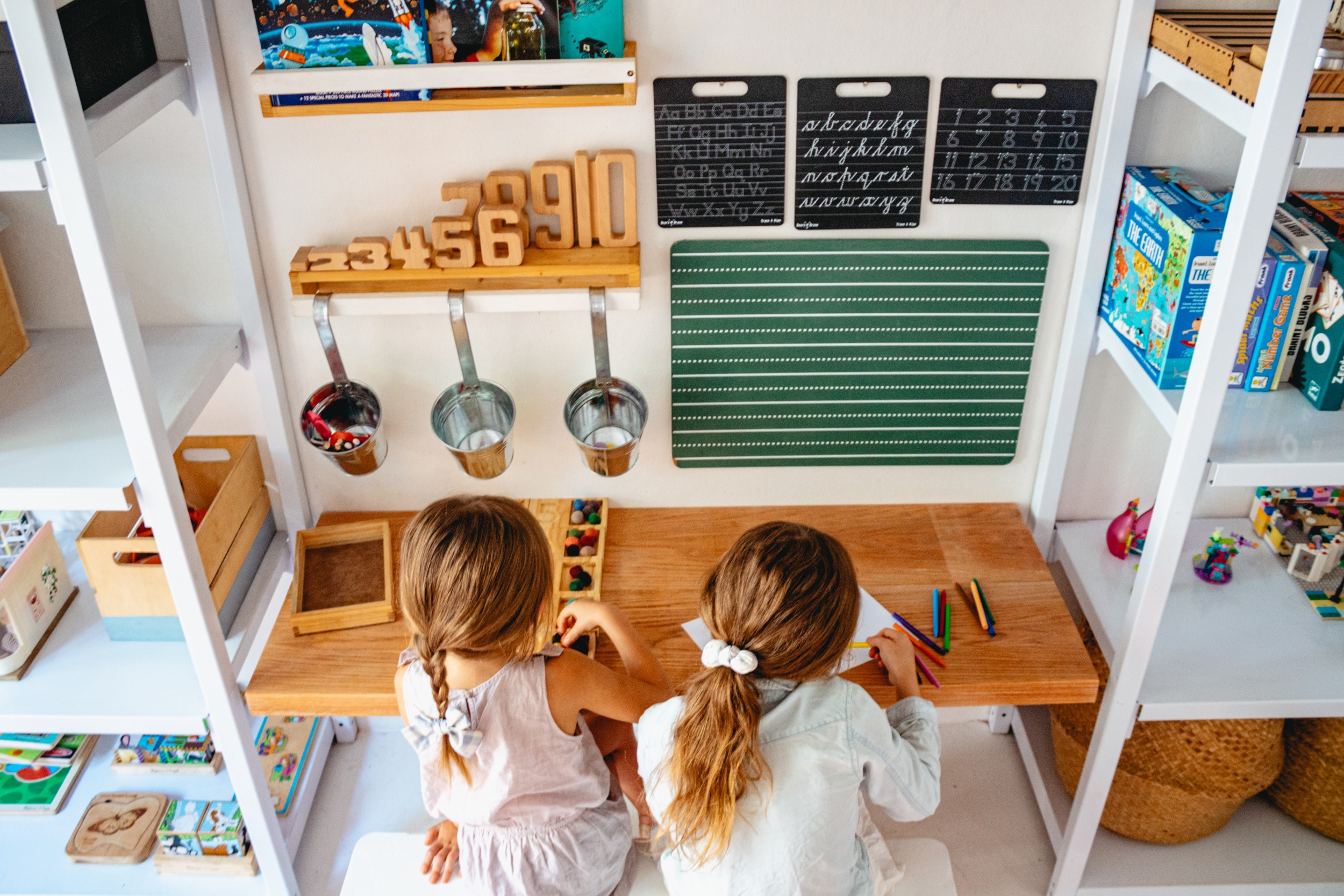
A homework station does not need a separate study room to work well. A corner of the kitchen, living room, hallway, dining area, or family room can become an effective study spot when storage, lighting, seating, and distractions are handled thoughtfully. The best homework station ideas support concentration while allowing the space to return to normal family use afterward.
Choose a Spot With the Right Amount of Supervision
Younger children often benefit from working where an adult is nearby, especially when they need help with instructions or staying on task. A kitchen-adjacent desk or dining nook can provide supervision without requiring someone to sit beside them.
Families collecting family home planning ideas should consider noise as carefully as available square footage. A small calm corner can work better than a larger desk beside a television.
Keep the Work Surface Clear
A study surface should have enough room for a notebook, textbook, device, and writing tools. Decorative accessories can quickly consume the space children actually need.
Use Storage That Disappears After Homework
Shared rooms work best when school supplies have defined storage. A rolling cart, drawer unit, wall pocket, or portable supply box lets the area change back after study time.
Looking at shared-space design ideas can help reveal ways to use furniture for more than one purpose. A console table, built-in bench, or cabinet may provide study storage without making the room feel like a permanent classroom.
| Need | Simple Solution | Why It Helps |
|---|---|---|
| Writing supplies | Portable caddy | Easy cleanup |
| Papers | Vertical file | Reduces piles |
| Device charging | Cable station | Keeps cords contained |
| Books | Nearby shelf | Frees desk surface |
Get the Lighting Right
Natural light can make a study area pleasant during the afternoon, but homework often continues after sunset. Add a focused desk lamp or nearby fixture so children are not working in the shadow of an overhead light.
Households browsing residential lifestyle inspiration may be drawn to attractive lighting, yet glare matters too. Screens should be positioned so windows and lamps do not reflect directly into them.
Use Adjustable Light Where Possible
An adjustable lamp can serve reading, writing, crafts, and computer work. It also gives the homework station flexibility as children grow and their assignments change.
Control Distractions Without Isolating the Student
Shared spaces will never be completely silent, and they do not need to be. The goal is to remove the most disruptive distractions during focused work.
Turning off a nearby television, keeping toys outside immediate reach, or setting a temporary quiet period may be enough. Headphones can help older students, although younger children may need to remain more connected to what is happening around them.
Where Homework Stations Commonly Fail
A station can look organized and still be uncomfortable. A poor chair height, weak lighting, insufficient elbow room, or constantly missing supplies can turn homework into a daily negotiation.
Another mistake is asking the space to store every school item. Current materials should stay close, while old projects, extra notebooks, and archived papers can move elsewhere. Keeping the station light and usable is more valuable than filling every drawer.
Frequently Asked Questions
Can a dining table work as a homework station?
Yes. A portable supply caddy and nearby paper storage can turn a dining table into a temporary study area that can be cleared quickly before meals.
Where should homework supplies be stored in a shared room?
Keep frequently used items close to the study surface in a drawer, cart, cabinet, or portable container. Less frequently used materials can stay in another storage area.
How can siblings share one homework area?
Provide separate supply containers where useful and establish enough surface space between students. Different homework schedules can also reduce distraction when the area is small.
Create a Study Space That Can Adapt
A successful homework station supports schoolwork without taking over the entire room. Start with a comfortable surface, useful lighting, easy-to-reach supplies, and a simple cleanup system. Shared family spaces change throughout the day, so the study area should be able to appear when needed and disappear just as easily when homework is finished.


