
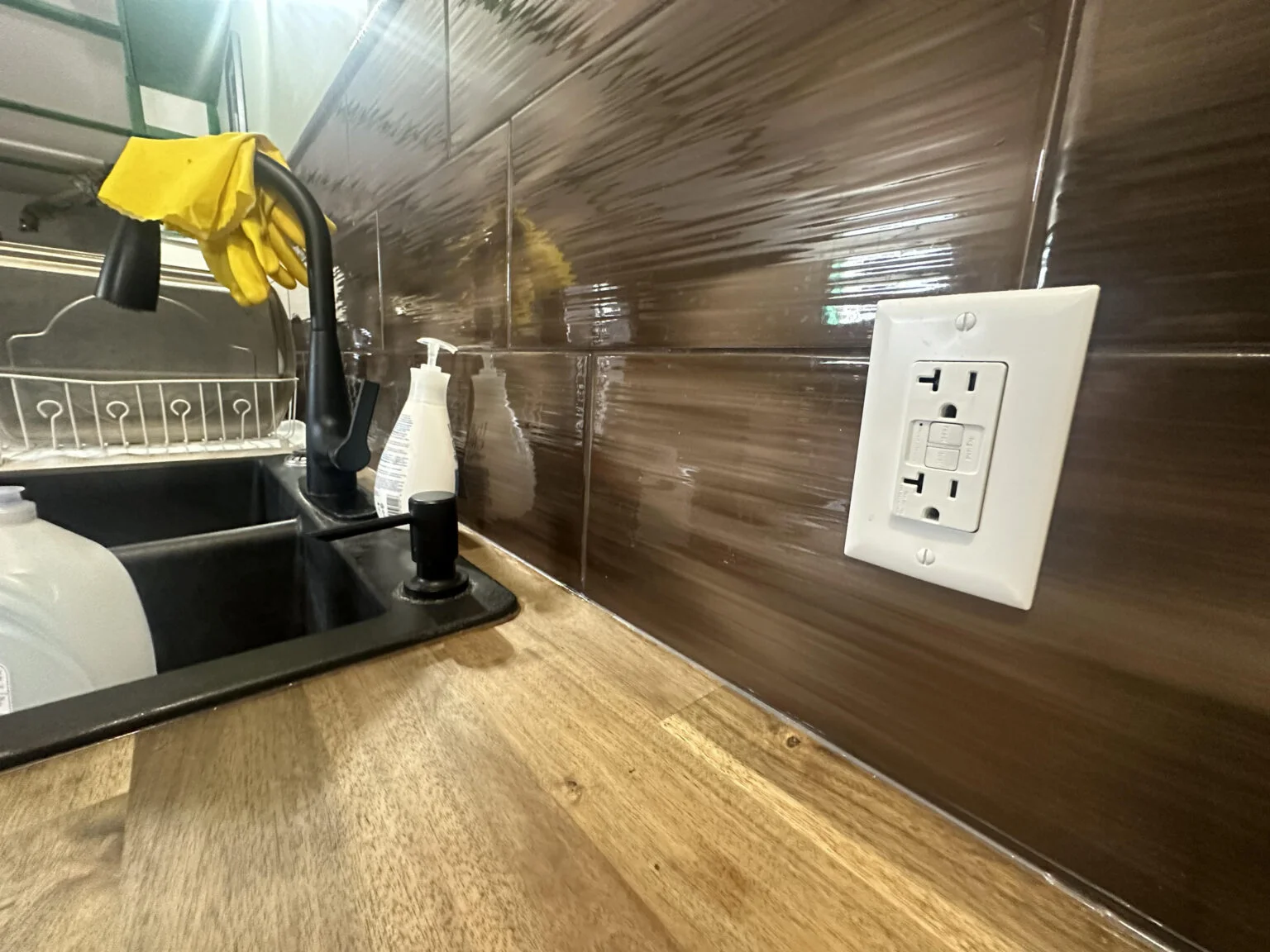
Water and electricity make certain parts of a home more demanding than ordinary living spaces. Ground-fault circuit interrupter protection is designed to reduce electric-shock risk by disconnecting power when it detects an abnormal difference in current flow.
Bathrooms and kitchens are familiar examples, but garages, laundry spaces, basements, outdoor areas, and utility locations can also involve moisture or grounded surfaces. Good GFCI protection starts by identifying the entire area rather than concentrating only on the outlet closest to a faucet.
Map the Wet and Utility Zones First
Walk through the home and note areas where electrical equipment is regularly used near water, damp surfaces, exterior conditions, or utility equipment. Sinks are only one clue.
A garage may contain freezers, tools, chargers, and cleaning equipment. Laundry rooms combine electricity with plumbing, while outdoor receptacles face changing weather.
Visual planning resources such as practical wall-layout ideas can help organize receptacle locations, but protection requirements should be determined by the electrical installation and applicable local rules.
Understand Receptacle and Breaker Protection
GFCI protection can be provided in different ways. A receptacle-style device may protect itself and correctly connected downstream outlets, while a GFCI circuit breaker can protect wiring on the circuit from the panel.
Neither approach is automatically better for every home. Accessibility, troubleshooting, circuit layout, existing equipment, and local requirements all affect the decision.
During renovation planning, interior improvement references can be useful for coordinating electrical work with cabinets, appliances, and utility-room layouts so protective devices remain reachable.
| GFCI Approach | Possible Advantage | Planning Issue |
|---|---|---|
| GFCI receptacle | Reset near point of use | Must remain accessible |
| GFCI breaker | Centralized protection | Panel access required |
| Downstream protection | Several outlets protected | Correct wiring matters |
| Combination strategy | Flexible circuit design | Troubleshooting complexity |
Keep Test and Reset Access Practical
A protective device isn’t convenient if furniture, appliances, shelving, or cabinetry makes its controls nearly impossible to reach. Consider servicing access when outlets are positioned.
In utility spaces, an outlet may later end up behind a freezer or storage rack. Moving the protective device to a logical accessible point can make periodic testing and troubleshooting easier when the circuit design permits.
Household planning from comfortable utility-space ideas can therefore influence usability even though the electrical protection itself remains a technical decision.
Know What GFCI Protection Does—and Doesn’t Do
GFCI protection is aimed primarily at ground-fault shock hazards. It shouldn’t be treated as a substitute for proper grounding, correctly sized wiring, overcurrent protection, weather protection, or safe appliance condition.
A receptacle that repeatedly trips also shouldn’t be defeated simply to keep equipment running. Repeated operation can indicate a problem with an appliance, moisture, wiring, or the circuit that deserves investigation.
GFCI devices include test functions so their protective operation can be checked. Follow the device manufacturer’s testing instructions, and arrange replacement or professional evaluation if the device doesn’t test or reset correctly.
Common GFCI Assumptions That Cause Problems
One mistake is assuming the only protected receptacle is the one with TEST and RESET buttons. A single device may protect additional outlets downstream, so troubleshooting can involve a GFCI located elsewhere.
Another error is replacing a tripping GFCI with an ordinary receptacle without identifying why it was installed. Protection should not be removed merely because trips are inconvenient. Local electrical requirements and the actual circuit arrangement should guide changes.
Frequently Asked Questions
Why does my outlet have TEST and RESET buttons?
Those controls are commonly found on GFCI receptacles and some other protective devices. TEST checks the device’s protective function, while RESET restores power after a successful test or trip when conditions permit.
Can one GFCI protect several outlets?
Yes, certain wiring arrangements allow a GFCI device to protect correctly connected downstream receptacles. Because wiring errors can defeat that protection, modifications should be performed correctly and verified.
Why does a GFCI keep tripping?
Possible causes include moisture, damaged equipment, wiring problems, or an actual ground fault. Repeated trips should be investigated instead of bypassing the protective device.
Keep Protection Easy to Find and Maintain
GFCI planning works best when protection is treated as part of the circuit rather than as one special-looking outlet near a sink. Identify wet and utility zones, understand which outlets are protected together, keep test controls accessible, and investigate unexplained trips. Where wiring changes or uncertain circuit arrangements are involved, a qualified electrician can verify that the intended protection is actually present.

