Ask any contractor about the most common mistake homeowners make on a renovation, and the answer is rarely about design choices or hiring decisions. It is about sourcing. Buying the same thing twice. Forgetting a critical item until installation day. Paying retail for materials a wholesaler down the road would have sold at half the price.
The sourcing problem hides behind every renovation budget that runs over. Here is how to avoid the traps that cost most homeowners between five and fifteen percent of their total project budget.
Build the full list before buying anything
The single best habit any renovator can adopt is delaying the first purchase until the complete materials list exists on paper. Not in your head. Not in a half-finished spreadsheet. A complete list, item by item, with quantities, dimensions, and SKU numbers where available.
The reason is simple. Renovation materials interlock in ways that are easy to overlook. The thinset you need depends on the tile you chose. The tile you chose depends on the grout color you want. The grout you want depends on whether the room has heated floors. Buying anything before the chain is mapped guarantees that something further down the line will be incompatible.
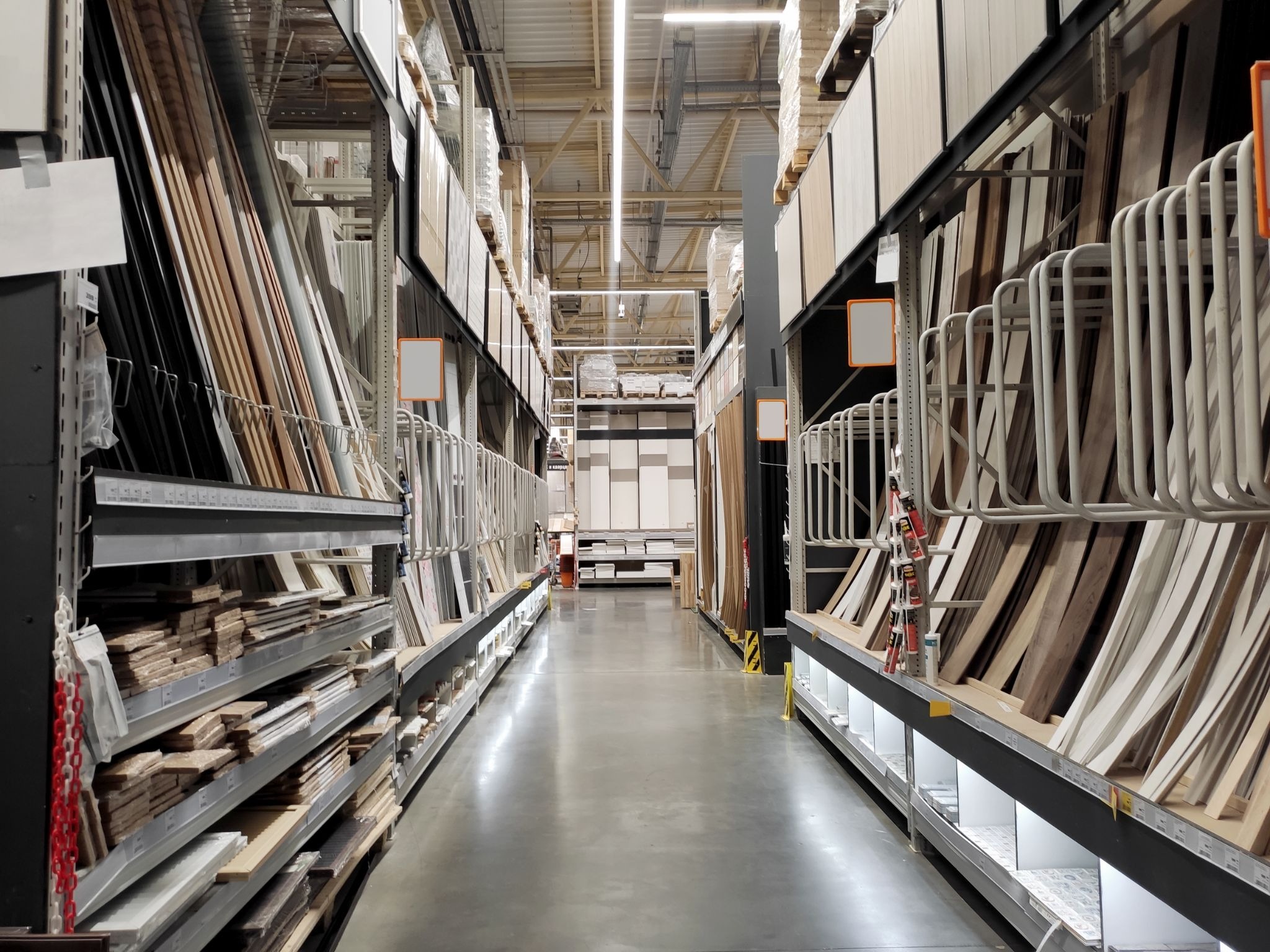
Most experienced renovators source from a mix of large warehouses and specialized suppliers. A local outfit like the Entrepôt de la Réno warehouse typically handles the high-volume categories such as ceramics, vanities, and installation supplies under one roof, while specialty items like custom glass or imported fixtures come from suppliers with deeper niche inventories. Mapping which item comes from which source before any purchase prevents the duplicate buying that destroys budgets.
Order quantities with deliberate overage
Tile, flooring, and grout all need to be ordered with overage. The percentage depends on the material and the room layout. Square or rectangular rooms with simple patterns need ten percent overage. Diagonal layouts, herringbone patterns, or rooms with multiple corners need fifteen to twenty percent overage.
The mistake most homeowners make goes in the opposite direction. They order the exact square footage shown on a calculator, assume the math protects them, and discover during installation that they are three boxes short. A second order means a second delivery fee, a new dye lot that will not match the original, and a delay that pushes the contractor onto the next job.
The economics here favor the overage every single time. A box of leftover tile costs forty dollars. A delayed installation costs ten times that in lost contractor time and extended living disruption.
Use the cash-and-carry advantage when it exists
Big box retailers price their flooring and tile assuming most customers will need delivery. The price already absorbs that logistics cost. Suppliers who let you pick up directly often quote significantly lower per-unit prices because they can pass the savings back.
For a typical bathroom renovation involving around two hundred square feet of ceramic, fifty pounds of thinset, and a vanity, picking up directly can save between one hundred fifty and four hundred dollars compared to delivery from a competitor. The math changes for larger jobs where multiple pallets are involved, but for residential bathroom work, a pickup truck and a Saturday morning almost always beat home delivery economics.
Confirm dimensions before you leave the store
Vanities, sinks, and tubs are returned more often than any other renovation category because of dimensional mismatches. The catalog shows a thirty-six inch vanity. The actual product, with side panels and trim, occupies thirty-seven and a half inches of wall space. The doorway the vanity needs to fit through measures thirty-six inches. The vanity does not enter the bathroom.
Every dimension matters before the box leaves the parking lot. Width of the item. Width of the box. Width of every doorway and hallway between the front door and the destination room. Height of the doorway, because a six-foot vertical box does not pivot through a five-foot-ten ceiling angle.
This sounds obvious until you watch a vanity get carried back to the truck because the upstairs bathroom door is three-quarters of an inch too narrow. Measuring twice does not eliminate this problem completely, but it eliminates the version where the failure happens after the receipt is signed.
Track lead times like deadlines
Stocked items ship within a week. Special orders ship within four to eight weeks. Imported items, particularly Italian or Spanish ceramics, can take twelve to sixteen weeks. The trouble starts when a homeowner falls in love with a tile that takes three months to arrive and sets a renovation start date for next month.
Treat every special order item as if its arrival date is a hard deadline. Order it first, before any demolition begins. The contractor can work around almost any other delay, but cannot install tile that has not arrived from Milan.
For the items that ship quickly, the opposite logic applies. Order them last. Storing twenty boxes of ceramic in a small condo for six weeks creates its own logistical problem, and increases the risk of dye lot drift if part of the order needs replacement.
Keep a returns folder from day one
Renovations almost always involve returns. A faucet that does not match the vanity. A grout color that looked different in the showroom. A box of tile from the wrong dye lot. The homeowners who recover the most money on returns are the ones who keep every receipt, every packing slip, and every product label in one physical folder from the day the first purchase happens.
Stores have different return windows. Some are thirty days. Some are sixty. Some require original packaging and unopened condition. Some accept tile returns by the box but not the partial box. Knowing each store’s policy at the moment of purchase, not at the moment of return, prevents the common scenario where two hundred dollars of unused material gets thrown in the dumpster because the receipt is gone.
The mental shift that changes everything
The sourcing approach that works treats material acquisition as a discrete project with its own timeline, its own logistics, and its own risk management. Not as something that happens incidentally while making design decisions. Homeowners who separate the two phases, finalizing every selection before any purchase happens, consistently come in under budget and on schedule.
The homeowners who blend the phases, buying tile this weekend and faucets next weekend and discovering halfway through that nothing quite fits together, are the same homeowners who feature in horror stories about renovations that took twice as long and cost forty percent more than estimated. The difference between the two outcomes is rarely about money or design taste. It is about how the sourcing got planned.